Scene8
The original Spatial Envelope collection contains 2,688 RGB outdoor scene images
in eight classes, each 256 x 256 pixels. The builder preserves original JPEG
bytes, labels, and image IDs. It exposes the complete collection as train;
this is not an official training partition.
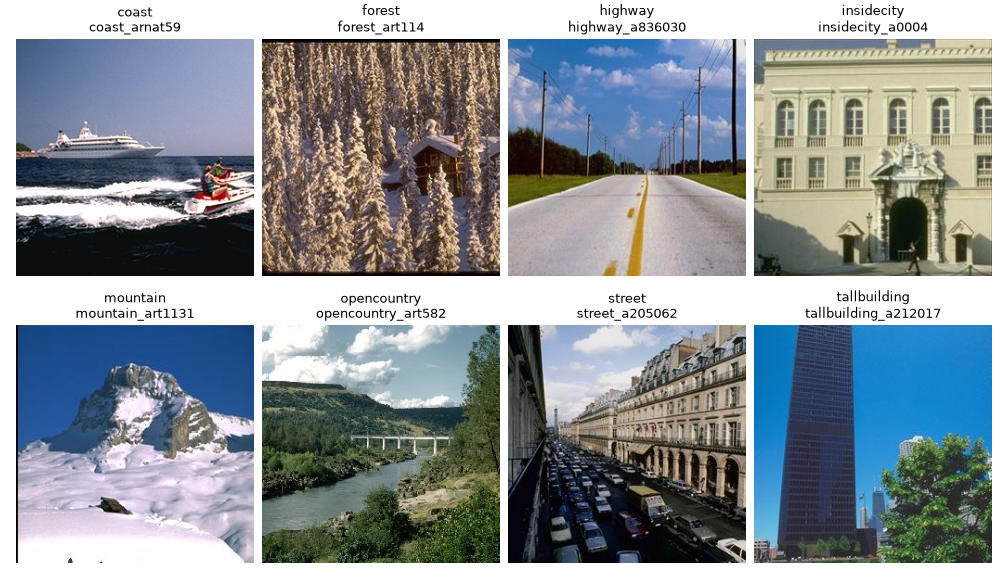
Fig. 5 One example per class, selected by the first image ID in each class. Source images are resized for display without cropping or changing labels.
Data Structure
Key |
Type |
Description |
|---|---|---|
|
PIL.Image.Image |
RGB PIL image, 256 x 256 pixels |
|
int |
Integer class ID (0–7) |
|
str |
Original filename stem, unique within the dataset |
Usage
from stable_datasets.images import Scene8

ds = Scene8(split="train")
sample = ds[0]  # image: PIL image, label: int, image_id: str
print(ds.features["label"].names)

# Standard library options control cache locations.
ds = Scene8(split="train", download_dir="/data/downloads",
            processed_cache_dir="/data/processed")
Class IDs follow the fixed order coast, forest, highway, insidecity,
mountain, opencountry, street, and tallbuilding. Rows are sorted
by image ID. Standard caching, formatting, and transforms are supported.
Testing
The tests download the original release through the standard dataset API and check split sizes, class counts, image decoding, stable IDs, and cache reopening. Offline parser tests additionally check invalid inputs and label matching.
Source and terms
Original page and download: https://people.csail.mit.edu/torralba/code/spatialenvelope/
The original page does not specify a dataset-wide license. The library’s code license does not grant a license to redistribute the images. Download checksums identify the locally audited release rather than publisher signatures.
Citation
@article{oliva2001modeling,
    title={Modeling the shape of the scene: A holistic representation of the spatial envelope},
    author={Oliva, Aude and Torralba, Antonio},
    journal={International Journal of Computer Vision},
    volume={42}, pages={145--175}, year={2001}
}
Known exact-pixel duplicates are retained as source records. Evaluation code should group duplicate images within partitions and avoid train/test leakage.